

Why do some teenagers adapt to contact lenses almost immediately while others struggle with comfort, dryness, or frustration after only a few days? And why are many Sydney parents surprised to learn that some contact lenses are significantly easier for teenagers to manage than others?
The answer usually comes down to lens selection, hygiene, and whether the fitting process has been done properly from the beginning.
My name is David Truong, and I am the Principal Optometrist and Owner of Beyond Eyecare in Sydney. We regularly help teens and parents navigate first time contact lens fittings and the practical realities of safe contact lens wear for growing eyes.
In this article, you will learn why we commonly recommend certain brands of contact lenses for Sydney teenagers.
KEY TAKEAWAYS
- Daily disposable contact lenses are a good starting point for teenagers because they don’t require strict cleaning routines
- Teenagers are usually ready for contact lenses when they demonstrate they can maintain hygeinic contact lens handling routines
- Myopia control contact lenses can correct blurry vision while also helping slow the progression of short-sightedness during the teenage years.
- A proper contact lens fitting assesses eye health, lens comfort, prescription accuracy, and safe handling skills rather than simply checking eyesight alone.
Is My Teenager Actually Ready For Contact Lenses?
Teenagers can successfully wear contact lenses when they are mature enough to manage the routine safely and consistently. In our experience, the start of high school is one of the most common transition points for contact lenses. But age matters far less than maturity and good eye care habits.
Can your teenager also reliably manage homework, sports gear, and basic personal hygiene without constant reminders? That usually tells us far more than their birthday does.
Motivation also plays a huge role. Teens who genuinely want contact lenses teenagers tend to adapt faster and follow hygiene rules more carefully.
Why Do Teenagers Try Contact Lenses?
Contact lenses solve plenty of practical frustrations. Glasses slipping during sport, fogging up in winter, or bouncing around during weekend activities quickly becomes tiring. For Sydney youngsters balancing school, screen time, and a social life, daily disposable lenses often feel simpler and more convenient.
We also recognise that confidence matters. Many teens feel more comfortable participating in sport, social events, and school activities once they make the move from glasses into contact lenses.
What Types Of Contact Lenses Work Best For Teenagers?
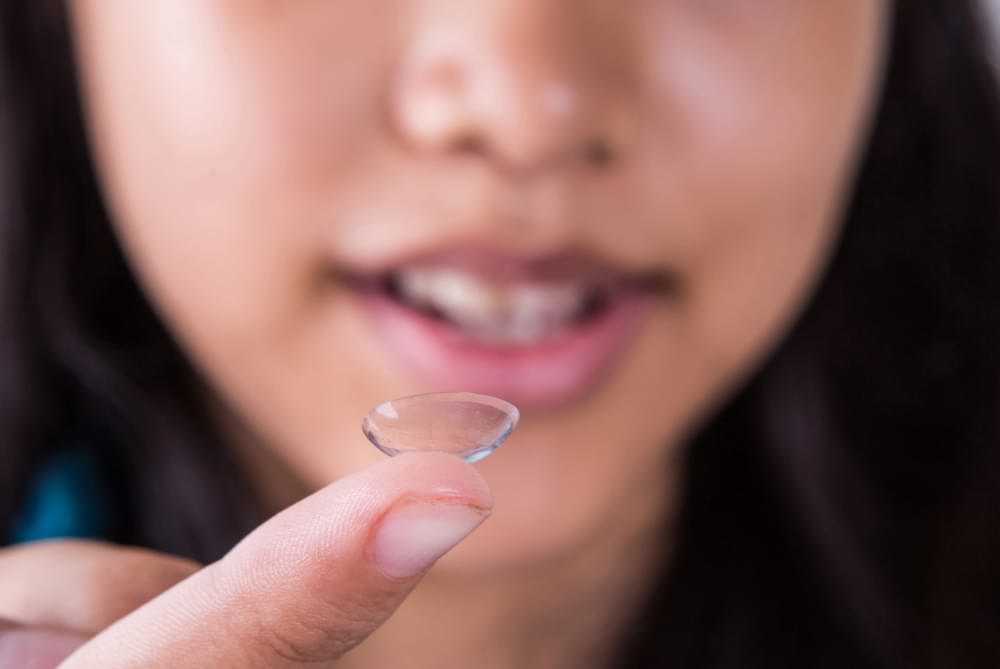
Daily disposable soft contact lenses are usually the safest and simplest starting point for teenagers. They remove the cleaning routine completely because your teen opens a fresh sterile pair each morning and throws them away at night.
Research estimates microbial keratitis (a serious eye infection) is a rarity for single use lenses, occuring in roughly 1–2 per 10,000 daily disposable contact lens wearers per year. This is a strong reason why many optometrists prefer daily lenses for younger wearers.
What Special Types of Soft Contacts Are Available?
Some teenagers with astigmatism (an irregular shaped cornea) need toric contact lenses. These lenses stabilise on the eye to provide clearer and more consistent vision throughout the day which regular contact lenses can’t provide them.
For teens with worsening short-sightedness, myopia control lenses can correct blurry vision while also helping slow prescription progression. Clinical trials of CooperVision’s MiSight 1 day lens showed it slowed myopia progression by an average of 59% over three years compared to a standard daily lens.
Which Brands Do We Recommend At Beyond Eyecare — And Why?
For many first time contact lenses wearers, we regularly recommend Acuvue Oasys 1-Day. One reason is comfort. The lens material works closely with the natural tear film, which helps reduce that dry, scratchy feeling teenagers often notice during long school days or heavy screen use. We also find many teens adapt to this brand surprisingly quickly, particularly if they were nervous about contact lenses initially.
We also frequently recommend Dailies Total One. These lenses have an extremely smooth surface with very high moisture content, so they tend to feel less noticeable on the eye. That can make a major difference for teenagers who are sensitive to dryness or who struggled with soft contact lenses in the past.
Comfort and hygiene drive most of our recommendations. Teenagers are far more likely to wear contact lenses safely when the lenses feel easy, comfortable, and low maintenance from day one.
What Happens During A Teenager Contact Lens Fitting In Sydney?
What surprises many parents is how different a contact lens fitting is compared to a standard eye test. We are not simply checking whether your teenager can read smaller letters on a chart. We are assessing whether the lenses physically suit the eyes, whether the prescription performs properly on the eye itself, and whether the lenses fit comfortably enough for safe daily wear.
At Beyond Eyecare, a contact lens fitting teens appointment usually runs between 45 and 60 minutes. We assess corneal shape, tear film quality, prescription stability, and lifestyle factors such as sport, screen use, and school routines. If a teenager has worsening short-sightedness, we also discuss whether myopia management lenses may be appropriate.
We then use trial lenses to assess vision and comfort before anything is ordered. Even small prescription adjustments can change how lenses perform.
We also spend time teaching insertion, removal, and the hand hygiene that teens need to manage safely contact lenses at home. Most teenagers learn faster than their parents expect.
What Are The Non-Negotiable Safety Rules For Teen Contact Lens Wearers?
Safe contact lens wear always starts with clean hands. Every single time a teenager touches their lenses, they should wash and thoroughly dry their hands first. Many contact lens infections begin when bacteria or contaminants transfer from fingers directly onto the lens surface.
Teenagers should never rinse lenses with tap water, swim while wearing lenses. Water exposure is a major issue because acanthamoeba keratitis, a rare parasitic eye infection can occur when single celled amoeba become trapped behind the lens against the surface of the eye.
Patients should avoid sleeping with contact lenses. According to some studies it increases the risk of corneal infection by 6 to 8 times.
We also strongly recommend that every teenage contact lenses wearer keeps an up-to-date pair of glasses available. If the eyes become red, painful, irritated, or unusually sensitive to light, the lenses should come out immediately.
Most problems we see are not caused by the contact lenses themselves. They usually come from wearers taking regrettable shortcuts or forgetting good habits.
What Do Parents Most Commonly Ask About Teen Contact Lenses?
Q. What Is the minimum age for contact lens wear?
A. There is no strict minimum age for contact lenses for teens. In practice, most teenagers start wearing contacts between 12 and 14 years old, particularly around the beginning of high school. However, younger children can also be successfully fitted with lenses for myopia management when the situation calls for it.
Q. Does Medicare cover contact lenses for my child?
A. In Australia, Medicare generally does not cover contact lenses or fitting fees. However, many private health funds include optical extras that can contribute toward costs. We always discuss pricing clearly before proceeding so there are no surprises later.
Q. Is it safe to wear coloured or cosmetic lenses from novelty stores?
A. Many people assume these are harmless because they are sold as fashion accessories. They are not. Any lens that sits on the eye is a medical device and should be properly prescribed and fitted by an optometrist.
Final Thoughts
At Beyond Eyecare, I’ve found that teenagers usually decide very quickly whether contact lenses feel more like freedom or hard work. When the lenses are comfortable, easy to manage, and properly suited to their lifestyle, most adapt to them very quickly. When the fit is poor or the routine becomes frustrating, things tend to unravel.
Our goal is to help families make sensible long-term eye care decisions. Sometimes contact lenses are an excellent fit. Sometimes glasses remain the better option. A proper contact lens fitting process helps make that distinction clear before problems begin.
If your teenager is asking about contacts, struggling with glasses during sport, or experiencing worsening short-sightedness, then the right decision for you to make is to come and see us. We’d love to discuss your options together.
Book an appointment with Beyond Eyecare today at Zetland (02) 9662 6364 or Surry Hills (02) 9556 1160. You can also schedule a convenient time through our website.

Therapeutical endorsement