

Could your contact lenses be leaving your eyes exposed to harmful UV radiation without you knowing it? And if you’re already wearing sunglasses outdoors, do you really need to worry about UV protection in your contact lenses at all?
The answer surprises most people: many contact lenses provide little or no UV protection, while peripheral UV damage that sneaks in from the sides of our sunglasses can accumulate silently for years before the consequences become obvious.
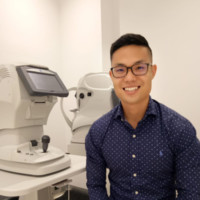
My name is David Truong, Principal Optometrist and Owner of Beyond Eyecare, and helping patients protect their long-term eye health is an important part of every contact lens consultation we provide.
In this article, you’ll learn how UV radiation affects the eyes, which contact lenses provide meaningful UV protection, and how to protect your vision from Sydney’s harsh sun.
KEY TAKEAWAYS
- UV damage to the eyes can accumulate over time and may contribute to permanent eye health problems.
- Not all contact lenses provide UV protection, so checking for Class 1 or Class 2 UV labelling is important.
- UV-blocking contact lenses should complement sunglasses rather than replace them.
- The best UV-protective contact lens choice depends on your eye health, lifestyle, and wearing habits.
How Serious Is UV Damage to Your Eyes in Sydney?
UV damage to the eyes can be permanent, cumulative, and far more common in Sydney than most people realise.
What catches many new contact lens wearers off guard is that UV exposure is not limited to scorching summer afternoons. UV-A and UV-B rays pass through cloud cover and bounce off water, sand, glass and even concrete. In a city like Sydney, where being outdoors is a frequent part of our lifestyle, eyes can accumulate UV exposure year-round without you realising.
We often compare UV damage to rust on a car. You rarely notice it forming day by day. Then one morning the damage is obvious and difficult to reverse. Eye tissue behaves much the same way. Long-term UV exposure has been linked to cataracts, pterygium, and earlier degeneration of delicate eye structures.
It’s sadly ironic that our own eyes can even work against us. The cornea itself can focus UV radiation up to 20 times more intensely at the corneal limbus (where the clear part of your eye, the cornea, meets the white), making this a particularly vulnerable area.
The eyelids are another danger area. Eyelid skin is extremely thin and frequently missed when applying sunscreen. Basal cell carcinoma (BCC) on or around the eyelid is one of the most common eye-area skin cancers in Australia.
Do Contact Lenses Actually Block UV Rays?
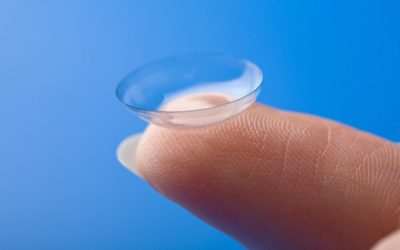
Some contact lenses do block UV rays, but many lenses on the market offer no UV filtering at all. Adding UV-blocking technology requires significant changes to the manufacturing process, which is why only select brands include it.
That surprises a lot of first-time wearers. Many people assume every contact lens includes UV protection in the same way that almost all polycarbonate spectacle lenses do. In fact, a 2023 survey by Optometry Australia found that only 34% of contact lens wearers actively consider UV filtering when selecting lenses.
The easiest way to confirm protection is by looking for Class 1 or Class 2 UV labelling on the packaging. Class 1 lenses provide the highest level of protection currently available in soft contact lenses, blocking at least 90% of UV-A and 99% of UV-B radiation.
- Class 1 lenses block at least 90% of UV-A and 99% of UV-B rays which is the higher standard recommended for Sydney’s UV conditions.
- Class 2 lenses block at least 70% of UV-A and 95% of UV-B. Still beneficial but not the highest level available
In high quality contact lenses that we prescribe, the UV-blocking agent is permanently embedded in the lens material and does not degrade or wash away with use over time.
Can Contact Lenses Replace Sunglasses For UV Protection?
No. Contact lenses with UV protection should support sunglasses, not replace them
Contact lenses only cover a small part of the eye. Even high-quality UV protection contact lenses leave the eyelids, conjunctiva (the white part of the eye), and surrounding skin fully exposed to sunlight. Those areas remain vulnerable.
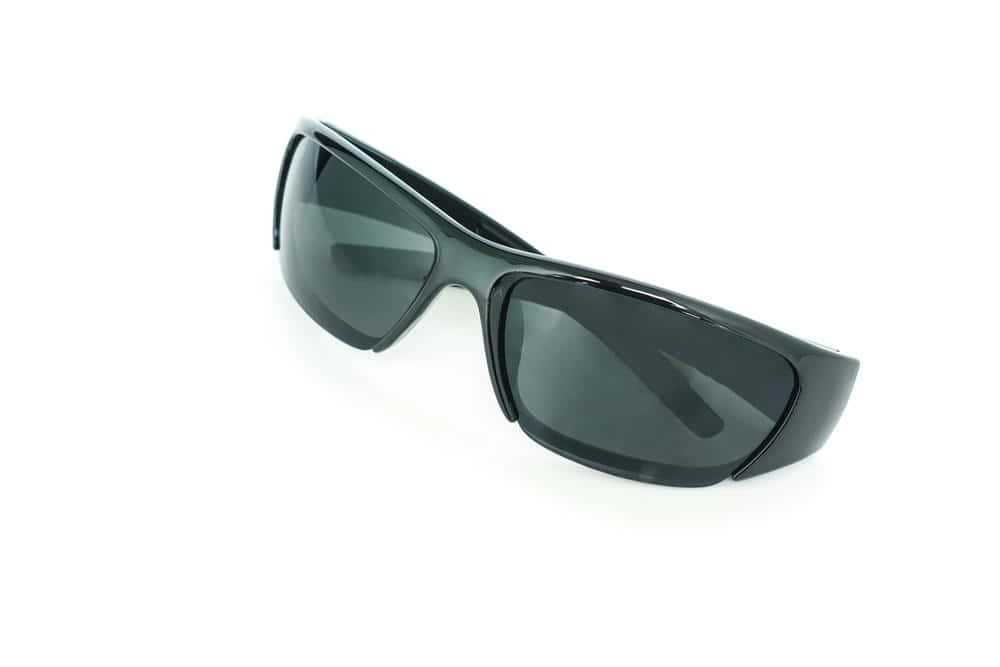
Most sunglasses, when used alone, still leave small peripheral gaps around the frame. That’s why we often recommend wraparound sunglasses, rated UV400 to give your eyes and eyelids the 360 degree range of protection they need.
Contact lenses then add another protective layer directly over the cornea.
Add a broad-brimmed hat into the mix and now you have “defence in depth” for your eyes from the Sydney’s harsh sun!
NOTE: Darker sunglass lenses do not automatically mean better UV protection. Always check for the UV400 (%100 UV Protection) rating regardless of tint.
How Do You Choose The Right UV-Protective Contact Lenses In Sydney?
The best contact lens choice depend on your lifestyle, eye health, and how often you plan to wear them.
Lenses which work brilliantly for one person may be frustrating for another. Someone who spends weekends at the beach or works outdoors may benefit from daily disposable UV blocking contact lenses because they are convenient, hygienic, and easy to replace.
Full-time wearers sometimes prefer monthly lenses that balance comfort, breathability, and cost over longer periods. Options include:
- Monthly reusable UV-blocking lenses such as Alcon TOTAL30
- Bi-Weekly reusable UV-blocking lenses e.g. ACUVUE OASYS, CooperVision Avaira Vitality
- Daily Disposable UV-blocking lenses e.g. ACUVUE OASYS MAX 1-Day, Alcon PRECISION1
Modern contact lenses use advanced moisture-retention technologies that mimic the natural tear film, reduce friction from blinking, and improve oxygen flow to the eye. For people with dry eyes, these designs help maintain comfort throughout the day while minimising irritation, dryness, and deposit build-up.
In any case, a professional contact lens fitting is always the right starting point. At Beyond Eyecare we remind patients that UV protection, eyewear comfort, eye health, and cost effectiveness matter equally.
Final Thoughts
Most people would never spend a day at the beach without sunscreen. Yet many of those same people wear contact lenses for years without giving a second thought to UV protection in their lenses.
The challenge is that UV damage doesn’t send a warning message. It accumulates quietly in the background, and by the time the consequences become noticeable, the opportunity to prevent some of that damage may already be gone.
But the good news is that protecting your eyes is usually straightforward once you understand your options. If you are unsure whether your current contact lenses provide the level of UV protection your eyes deserve, then the absolute best decision you can make is to come and see us at Beyond Eyecare to talk about your eye protection choices.
Book an appointment with Beyond Eyecare today at Zetland (02) 9662 6364 or Surry Hills (02) 9556 1160. You can also schedule a convenient time through our website.
Disclaimer – UV-blocking contact lenses certainly help provide protection against harmful UV radiation. However, clinical studies have not been done to demonstrate that wearing UV-blocking contact lenses reduces the risk of developing cataracts or other eye disorders.
Therapeutical endorsement