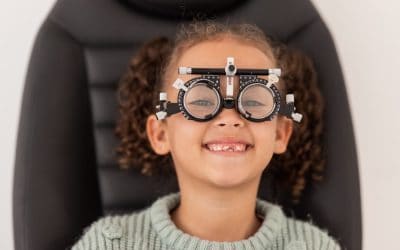


Your four-year-old has just had their eyes checked at preschool, and a letter arrives saying they need further assessment. Naturally, you might be wondering: is something wrong with their eyesight? Do they need glasses? And how quickly should you arrange an appointment?
The first thing to understand is that a StEPS referral letter doesn’t mean your child has been diagnosed with an eye condition. It means their screening result needs further investigation.
My name is David Truong, and I’m the Owner and Principal Optometrist at Beyond Eyecare in Sydney. I’ll explain what the NSW StEPS program checks, why children sometimes receive referrals and what happens during a follow-up eye examination.
KEY TAKEAWAYS
- The NSW StEPS program provides free vision screening for four-year-old children before they start school.
- A StEPS referral letter means further testing is recommended. It doesn’t necessarily mean your child has an eye condition.
- Parents can generally arrange a comprehensive children’s eye examination directly with an optometrist, without needing any further referral.
- Early follow-up is important because some childhood vision problems, particularly amblyopia (lazy eye), respond better to treatment when detected early.
What Is The NSW StEPS Vision Screening Program?
The Statewide Eyesight Preschooler Screening (StEPS) program is a free NSW Health initiative that offers vision screening to four-year-old children.
Trained screening staff visit preschools and long day care centres throughout NSW, usually after parents have provided consent.
During the screening, children identify letters, pictures or symbols on an age-appropriate vision chart.
Importantly, each eye is checked separately.
This matters because some children see clearly with one eye but have significantly reduced vision in the other. When both eyes are open, the stronger eye may compensate, making the problem difficult for parents to notice.
StEPS is a preliminary screening rather than a comprehensive eye examination. It primarily assesses distance vision and doesn’t fully evaluate the child’s prescription, eye coordination or overall eye health.
Should my child participate if their vision seems normal?
Yes. Young children often don’t recognise problems with their eyesight because they have no experience of seeing things differently.
A four-year-old who has always had blurry vision in one eye might simply assume that’s normal.
What Does A StEPS Screening Referral Letter Actually Mean?
Receiving a referral letter can be unsettling, but there’s an important distinction between identifying a possible problem and diagnosing one.
If your child’s screening result falls outside the expected range, or the result requires further investigation, you’ll receive instructions about the next step.
Several things could explain the result.
Your child may have a refractive error
These are common focusing problems that affect how clearly children see:
- Short-sightedness (myopia): Distant objects appear blurry.
- Long-sightedness (hyperopia): The eyes may need additional focusing effort, sometimes causing blurry vision or visual discomfort.
- Astigmatism: Differences in the eye’s curvature can cause blurred or distorted vision.
- Unequal vision: One eye may have a substantially different prescription or see less clearly than the other.
A comprehensive paediatric vision examination helps determine whether these conditions are present and whether treatment is needed.
Your child may have struggled with the screening
Four-year-olds don’t always respond predictably to vision tests.
Some become distracted, tired or shy. Others may have difficulty understanding instructions or identifying unfamiliar symbols.
Occasionally, a child who receives a referral will have normal vision when examined more thoroughly. However, I wouldn’t recommend assuming the referral is simply the result of poor concentration.
A follow-up examination can help clarify the screening result and determine whether any further care is needed.
What Should Parents Do After Receiving A StEPS Referral?
My advice is to follow the instructions in your child’s referral letter and arrange the recommended follow-up as soon as practical. You can generally book directly with an optometrist without needing a GP referral.
Depending on the screening findings, NSW Health may recommend an ophthalmologist, orthoptist or another eye health service. If you’ve been given specific instructions, follow those recommendations.
What should you bring to the appointment?
I’d suggest bringing:
- Your child’s StEPS referral letter and any accompanying feedback form.
- Their Medicare card or Medicare details.
- Any glasses they currently wear.
- Previous eye examination results, if available.
It’s also helpful to mention any concerns about squinting, eye turning, headaches or difficulty seeing distant objects, along with any family history of childhood eye conditions.
If you’re uncertain about the referral instructions, your local NSW Health StEPS coordinator can help explain the next steps.
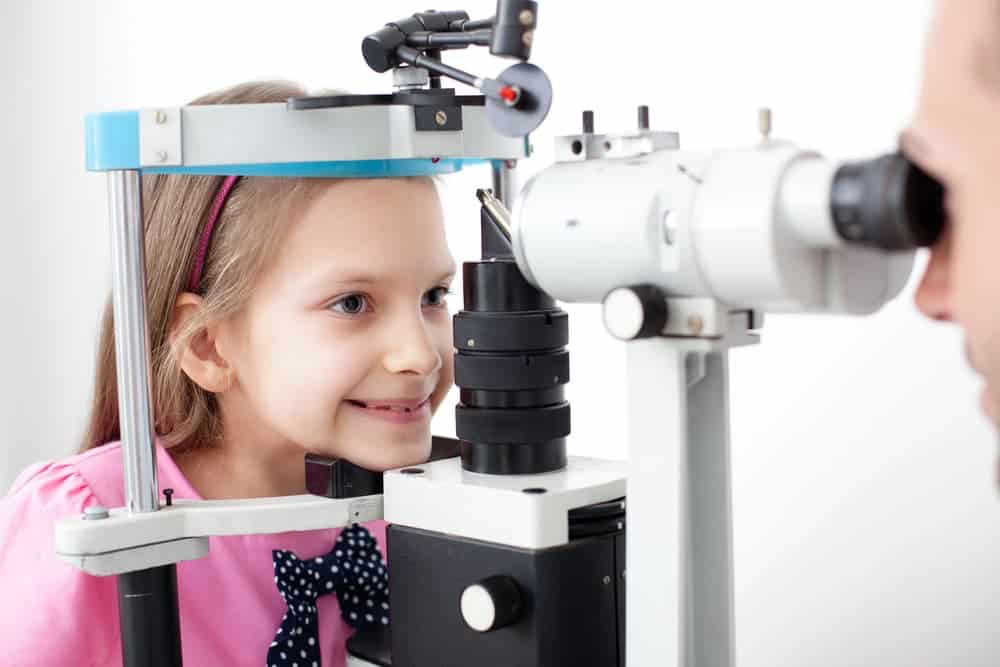
What Happens During A Comprehensive Children’s Eye Examination?
One question parents often ask is whether their four-year-old will be able to cooperate with a full eye examination.
The answer is that optometrists who are experienced with paediatric optometry will adapt the testing to the child’s age and ability.
At Beyond Eyecare, we use age-appropriate vision charts and diagnostic equipment to assess children’s eyesight.
A comprehensive examination generally includes several assessments.
Visual acuity
We check how clearly each eye sees using letters, pictures or symbols appropriate for the child’s age.
This helps us identify differences in vision between the two eyes.
Prescription testing
We assess for short-sightedness, long-sightedness and astigmatism.
Young children can sometimes compensate for long-sightedness by using their focusing muscles, so a prescription problem may exist even when they appear to see reasonably well.
Eye alignment and coordination
We examine whether the eyes point in the same direction and work together.
These tests help identify conditions such as strabismus, where one eye turns inward or outward, and factors associated with amblyopia (lazy eye).
Amblyopia occurs when vision in one eye, or occasionally both eyes, doesn’t develop normally during childhood. It can occur even when the eyes appear straight.
Overall eye health
We also examine the eyes for other conditions that might explain the screening result.
Once we’ve completed the assessment, we’ll explain what we’ve found and whether your child needs glasses, monitoring, treatment or referral to another eye health professional.
If your StEPS paperwork includes a feedback form, we can discuss completing it so the screening team receives the follow-up outcome.
Does Medicare Cover Eye Tests After A StEPS Referral?
The original StEPS screening is free, and Medicare provides rebates for eligible optometry consultations.
At Beyond Eyecare, we bulk bill general comprehensive eye consultations for eligible patients with a current Medicare card. This means there’s no out-of-pocket consultation fee for those appointments.
However, additional testing outside the standard consultation may involve separate charges.
You can review our bulk billing information or contact the practice to confirm what applies to your child’s appointment.
Medicare generally doesn’t cover the purchase of prescription glasses or contact lenses. If your child needs glasses, those costs are separate from the examination.
We recommend confirming any applicable fees before your appointment.
Why Is Early Follow-Up Important?
The preschool years are an important period for visual development. Certain childhood eye conditions respond better to treatment when identified early.
Amblyopia is a good example.
This condition can develop when the brain receives unequal visual input from the two eyes, or when the eyes are not properly aligned, affecting normal visual development. Without appropriate treatment, reduced vision in the affected eye can persist into adulthood.
Treatment may involve prescription glasses, patching, atropine drops or referral to a paediatric ophthalmologist, depending on the underlying cause.
Other children may simply need glasses, monitoring or no immediate treatment.
The purpose of the StEPS follow-up examination is to establish what’s happening and determine whether further action is necessary.
Final Thoughts
If your child receives a StEPS referral letter, please don’t ignore it or put off arranging a follow-up eye examination.
A four-year-old can appear to see perfectly well, even when there’s a problem affecting their vision. Waiting for them to complain about their eyesight, or assuming they were simply distracted during the screening, could mean missing an opportunity to identify and address a problem during an important stage of their development.
I’d far rather examine a child and find that everything is fine than have a treatable vision problem go unnoticed. We encourage parents to arrange the recommended follow-up assessment promptly.
At Beyond Eyecare, we can investigate your child’s screening result, explain what we find and recommend any appropriate next steps.
Book an appointment with Beyond Eyecare today at Zetland (02) 9662 6364 or Surry Hills (02) 9556 1160. You can also schedule a convenient time through our website.
Therapeutical endorsement