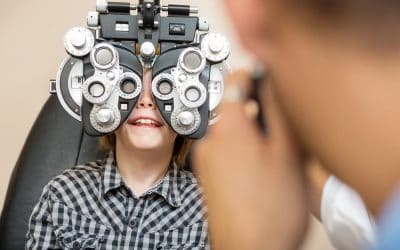

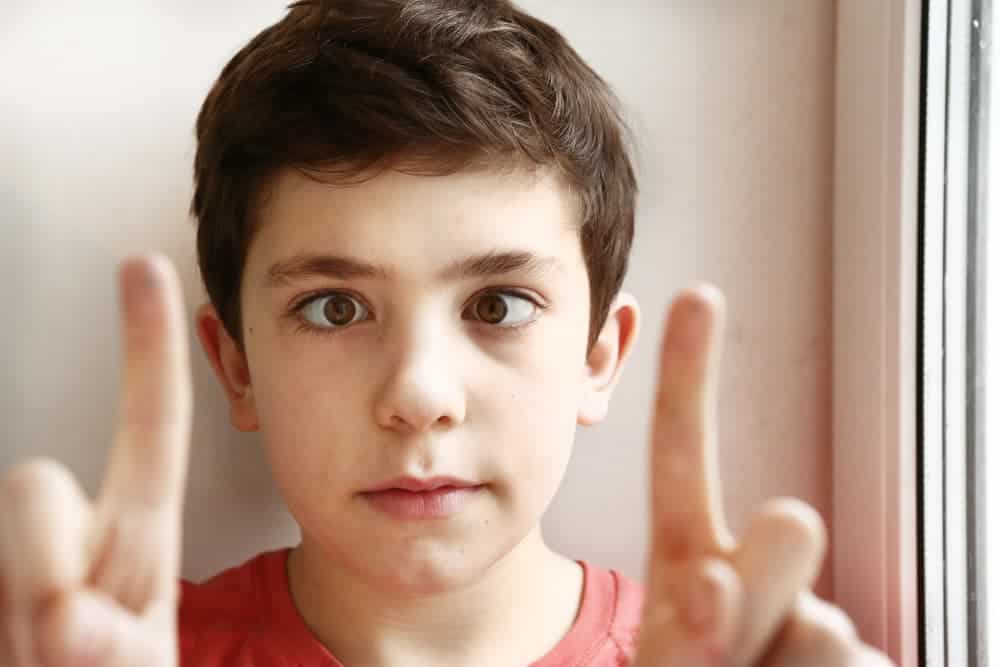
Have you noticed one of your child’s eyes occasionally turning inwards or outwards? Naturally, you might wonder whether they’ll grow out of it or need treatment.
An eye turn can indicate strabismus, a condition that affects how the eyes align and work together. Some children benefit from prescription glasses, while others need additional treatment.
My name is David Truong, and I’m the Owner and Principal Optometrist at Beyond Eyecare in Sydney. I’ll explain how we investigate strabismus, which treatments can help and when your child may need an ophthalmologist.
KEY TAKEAWAYS
- Strabismus occurs when the eyes don’t point in the same direction. It may affect depth perception and contribute to amblyopia (lazy eye).
- An optometrist can investigate strabismus through eye alignment, prescription and binocular vision testing.
- Prescription glasses can improve certain eye turns. Other treatments include prism lenses, selected eye exercises and surgery.
- Early assessment matters because persistent misalignment can interfere with a child’s developing vision. Sudden eye turns or new double vision require prompt medical attention.
How Can You Tell If Your Child Has Strabismus?
Strabismus occurs when one eye looks directly at an object while the other points in a different direction.
The eye may turn inwards (esotropia), outwards (exotropia), upwards or downwards.
Some children have a constant eye turn, while others experience intermittent misalignment. Parents might notice it during reading, when their child feels tired or while looking into the distance.
What symptoms should parents look for?
Apart from a visible eye turn, children with strabismus may:
- Tilt or turn their head to see more comfortably.
- Close one eye, particularly in bright sunlight.
- Have difficulty judging distances or catching objects.
- Experience eye strain or occasional double vision.
However, younger children don’t always recognise or report visual problems. Their developing brains may suppress information from one eye to avoid seeing two images.
Is strabismus the same as lazy eye?
No. Although people sometimes use the terms interchangeably, they describe different conditions.
Strabismus affects eye alignment, while amblyopia (lazy eye) affects visual development.
When a child’s eyes don’t align, their brain may begin ignoring the image from one eye. Over time, this can contribute to amblyopia, where vision in that eye fails to develop normally.
Not every child with strabismus develops amblyopia, but we need to check for both conditions.
Will children grow out of an eye turn?
Parents shouldn’t assume a persistent eye turn will disappear naturally.
Young babies sometimes show intermittent eye movements while their visual coordination develops. However, a constant eye turn at any age, or recurring misalignment beyond early infancy, needs professional assessment.
If your child suddenly develops an eye turn or double vision, seek urgent medical assessment, particularly if they also experience a headache, weakness, dizziness or other unusual symptoms.
What Happens During A Strabismus Eye Examination?
At Beyond Eyecare, we begin by discussing when you first noticed your child’s eye turn and whether it occurs constantly or intermittently.
If the turning only happens occasionally, photographs or short videos can help us understand what you’ve observed.
We then use several diagnostic tests to investigate their eye alignment.
Cover tests
During a cover test, we ask your child to look at a target while we cover each eye in turn.
By observing how their eyes move, we can identify misalignment and assess whether it changes when they look at nearby or distant objects.
Prism measurements
Prisms help us measure the direction and size of an eye turn.
These measurements give us a useful starting point for treatment decisions and allow us to compare alignment during future examinations.
Prescription and binocular vision tests
We check for short-sightedness, long-sightedness and astigmatism because some prescriptions can influence eye alignment.
We also assess eye movements, focusing ability and binocular vision, which describes how the brain combines information from both eyes.
For children, we check the vision in each eye separately to identify any associated amblyopia.
Once we understand the type and severity of misalignment, we can discuss the treatment options or recommend further investigation.
Can Prescription Glasses Help Straighten An Eye Turn?
Yes. For some children, prescription glasses can substantially improve eye alignment.
One example is accommodative esotropia, where a child’s eye turns inwards because of the focusing effort associated with long-sightedness (hyperopia).
When a child needs to work harder to focus, that effort can also cause excessive inward eye movement.
Correcting their long-sightedness with glasses reduces the focusing demand and may help their eyes align more effectively.
Some children achieve satisfactory alignment with glasses alone. Others have a remaining eye turn and need additional treatment.
Assessing the child’s prescription is therefore an important part of determining the most appropriate management approach
Do prism glasses help with eye turns?
Prism lenses bend incoming light to help the brain combine images from both eyes.
They can reduce troublesome double vision in selected cases of strabismus.
However, prisms don’t permanently change the underlying muscle alignment, and they aren’t suitable for every child.
An optometrist can assess whether prism lenses have a useful role in managing a particular eye alignment problem.
Can Eye Exercises Correct Strabismus Without Surgery?
Sometimes, although their usefulness depends on the condition.
Certain eye coordination problems respond to structured exercises. One example is convergence insufficiency, where the eyes struggle to turn inwards together when looking at nearby objects.
Children with convergence insufficiency may experience eye strain, blurred vision or double vision during reading.
Supervised exercises, sometimes supported by activities at home, can improve convergence in selected patients.
A randomised clinical trial involving 221 children found that supervised office-based therapy improved convergence insufficiency more effectively than home exercises alone.
However, convergence insufficiency differs from many forms of strabismus.
Eye exercises aren’t an established substitute for glasses or surgery in every type of eye turn, particularly large or constant misalignments.
The important question is whether your child’s particular condition is likely to respond to exercises, rather than assuming they offer a solution for all eye alignment problems.
When Does Strabismus Require An Ophthalmologist?
An optometrist can investigate eye misalignment, prescribe appropriate glasses and assess whether further treatment is necessary.
However, some children need assessment by an ophthalmologist, particularly when they have a significant or persistent eye turn, associated amblyopia or another condition requiring medical treatment.
Will my child need surgery to correct an eye turn?
Not necessarily.
Some children respond well to glasses, while others need an ophthalmologist to consider surgical treatment.
Strabismus surgery involves adjusting the position or action of the muscles controlling eye movement to improve alignment.
An ophthalmologist may recommend surgery when the type or severity of misalignment makes it appropriate. Children don’t necessarily need to try every non-surgical treatment first.
Surgery can improve eye alignment, but it doesn’t automatically correct associated amblyopia. Some children continue wearing glasses or need additional treatment afterwards.
If I identify a condition requiring ophthalmological care, I’ll explain the findings and why I recommend a referral.
Why Are Regular Reviews Important?
Strabismus treatment often requires ongoing monitoring, particularly during childhood.
As your child’s eyes develop, their prescription, alignment and ability to use both eyes together may change.
During follow-up eye examinations, we compare alignment measurements, check vision in each eye and assess whether the existing treatment remains appropriate.
We also monitor children for amblyopia, especially when one eye consistently turns or sees less clearly.
The frequency of reviews depends on your child’s condition and treatment plan.
Final Thoughts
Persistent or recurring eye turns in children should be professionally assessed.
Some children have a focusing-related eye turn that responds well to prescription glasses. Others need more detailed investigation or treatment from an ophthalmologist.
My advice is to find out what’s causing the misalignment while your child’s visual system is still developing. Early assessment helps us identify associated vision problems and determine whether treatment could help.
At Beyond Eyecare, we can examine your child’s eyesight, assess their eye coordination and explain the next steps. You don’t need to know which type of strabismus they have before making an appointment.
Book an appointment with Beyond Eyecare today at Zetland (02) 9662 6364 or Surry Hills (02) 9556 1160. You can also schedule a convenient time through our website.

Therapeutical endorsement