
Can a child have a lazy eye (amblyopia) when both eyes look perfectly straight? Yes. This is one reason amblyopia can go unnoticed. A child can see clearly with one eye and have considerably poorer vision in the other without complaining or showing an obvious eye turn.
My name is David Truong, and I’m the Owner and Principal Optometrist at Beyond Eyecare in Sydney. I’ll explain the signs parents should watch for, how we test children’s vision and which treatments can help.
KEY TAKEAWAYS
- Amblyopia (lazy eye) affects how vision develops, usually in one eye. It doesn’t necessarily cause a visible eye turn.
- An optometrist can investigate amblyopia through age-appropriate vision, prescription, alignment and eye health tests.
- Glasses often provide the first treatment for amblyopia. Some children also need patching, atropine drops or specialist care.
- Early assessment matters for “lazy eye” because treatment generally works better while a child’s visual system is developing. Children born prematurely face an increased risk.
How Can You Tell If Your Child Has A Lazy Eye?
Amblyopia develops when a child’s visual system doesn’t learn to see clearly through one eye, or occasionally both. In many cases, the brain favours the eye providing the clearer image, and vision in the other eye develops poorly.
Parents sometimes use lazy eye to describe an eye that turns inwards or outwards. That’s actually strabismus, an eye alignment problem. Strabismus can contribute to amblyopia, but a child can have amblyopia without any visible misalignment.
What signs should parents look for?
Some children show no obvious signs. Others may:
- Squint, close one eye or tilt their head to see.
- Struggle to judge distances or catch a ball.
- Have an eye that sometimes turns inwards or outwards.
- Prefer looking with one particular eye.
These behaviours justify an eye examination, but their absence doesn’t rule out amblyopia.
What causes amblyopia?
Amblyopia can develop when one eye has a much stronger prescription than the other, or when significant long-sightedness or astigmatism interferes with clear vision. An eye turn can also affect visual development.
Less commonly, a childhood cataract or another obstruction prevents a clear image from reaching the retina.
Does premature birth increase the risk?
Yes. Children born prematurely, particularly those born very early or with a low birth weight, face a greater risk of amblyopia. Premature birth increases the likelihood of eye alignment problems and prescription differences that can interfere with normal visual development of both eyes.
A 2006 Australian population-based study found that children born at 32–36 weeks had approximately 4.5 times the unadjusted risk of amblyopia compared with full-term children.
A more recent 2025 German study reported:
| Birth history | Children with amblyopia |
|---|---|
| Full-term births | 2.9% |
| Born at 28 weeks or earlier, without retinopathy of prematurity | 9.5% |
These findings reinforce the importance of appropriate eye examinations for children born prematurely, even when their eyes appear healthy.
What Happens During A Lazy Eye Test?
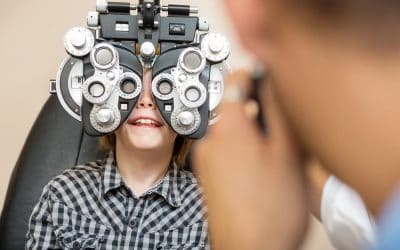
At Beyond Eyecare, we use a comprehensive children’s eye examination to investigate suspected amblyopia. Your child doesn’t need to read letters or describe exactly what looks blurry. We adapt the tests to their age and ability.
Checking each eye’s vision
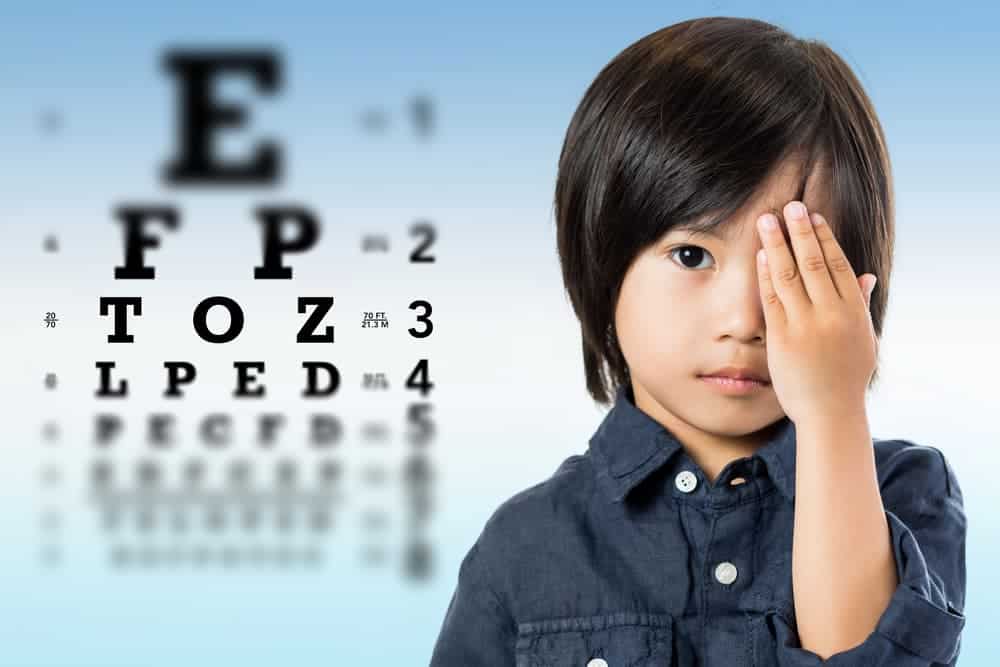
We assess each eye separately using suitable letters, pictures or symbols. This helps reveal a difference that the stronger eye might otherwise conceal.
Measuring their prescription
We check for short-sightedness, long-sightedness and astigmatism.
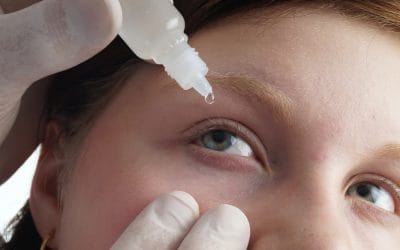
In some children, focusing muscles can conceal long-sightedness, so an optometrist experienced with paediatric patients may recommend drops that temporarily relax focusing to obtain more accurate measurements.
Assessing eye alignment and eye health
We observe eye movements and alignment, sometimes covering one eye and then the other to see how they respond. We may also check how the eyes work together and judge depth.
Finally, we examine the eyes for conditions that could explain reduced vision.
Before diagnosing amblyopia, we need to establish how well each eye can see with the correct prescription and rule out other causes of reduced vision.
Those findings guide our advice about glasses, treatment or referral.
Which Treatments Can Help Amblyopia?
Treatment depends on your child’s age, the underlying cause and how much vision has developed in the affected eye.
We first address anything preventing that eye from receiving a clear image.
Prescription glasses
Glasses often come first. Correcting an unequal prescription, significant long-sightedness or astigmatism gives the weaker eye a clearer image.
Some children improve substantially with consistent glasses wear alone, so their clinician will review progress before adding another treatment.
Eye patching
Patching covers the stronger eye for prescribed periods, encouraging the brain to use the weaker one.
A clinician sets the schedule according to the child’s needs and response. Some children need only a few hours each day.
Children sometimes resist patching because seeing through their weaker eye feels difficult. A predictable routine can help. Choose a regular time, encourage enjoyable activities and praise their effort.
If patching becomes a daily struggle, talk to the treating optometrist rather than abandoning treatment or changing the prescribed hours yourself.
Atropine eye drops
For some children, a prescribing optometrist may choose atropine drops instead of patching.
The drops reduce the stronger eye’s ability to focus up close, encouraging greater use of the weaker eye.
This approach differs from the low-dose atropine that clinicians use to slow childhood myopia. The two treatments have different goals and prescribing regimens.
Atropine can also affect near vision and cause light sensitivity, so your health care professional will discuss possible side effects and monitor your child’s response.
Specialist treatment
A child with a significant eye turn may need further assessment by an optometrist with a special interest in paediatric eye care or a paediatric ophthalmologist. Children with cataracts or other conditions potentially requiring surgery need assessment by an ophthalmologist.
Surgery can treat certain underlying problems, but it doesn’t automatically correct amblyopia. The child may still need glasses or additional treatment to improve visual development.
Why Do Early Diagnosis And Follow-Up Matter?
The brain learns to process visual information during childhood. When amblyopia interrupts that development, reduced vision may persist into adult life if nobody identifies and treats the cause.
Amblyopia doesn’t inevitably lead to complete blindness, but lasting impairment in one eye can affect depth perception and leave a child relying heavily on their stronger eye.
The earlier we identify amblyopia, the greater the opportunity to support a child’s visual development.
That doesn’t mean older children have missed their chance. Some teenagers also benefit from treatment, particularly if they haven’t received it before, although results vary.
How long does treatment take?
Some children improve within weeks; others need months. Their age, the severity of amblyopia and how consistently they follow treatment all influence progress.
During reviews, the child’s optometrist will check vision in each eye and adjust glasses, patching or other treatment when necessary.
Follow-up remains important after vision improves because amblyopia can recur.
Where Can You Arrange A Lazy Eye Test In Sydney?
An optometrist can perform an initial assessment and determine whether a child needs additional care.
At Beyond Eyecare, we examine children at our Zetland and Surry Hills practices and discuss any necessary referrals with parents.
If your child received a referral after a preschool vision screening, bring the results to the appointment.
We bulk bill eligible general comprehensive eye consultations through Medicare. Additional tests, glasses, specialist appointments and treatment may involve separate fees.
You can check our bulk-billing information before booking.
Final Thoughts
Don’t wait for a visible eye turn before checking your child’s vision. Amblyopia can remain hidden because a child may rely on their stronger eye without noticing the difference.
An eye examination can help identify potential concerns early, even when a child appears to see normally.
That’s why I encourage parents to arrange an examination when they notice unusual visual behaviour, an eye turn or a concern raised during a school or preschool screening.
At Beyond Eyecare, we can assess your child’s eyesight, explain the findings and recommend the next step. Early assessment can help ensure appropriate treatment is provided when needed.
Book an appointment with Beyond Eyecare today at Zetland (02) 9662 6364 or Surry Hills (02) 9556 1160. You can also schedule a convenient time through our website.

Therapeutical endorsement