

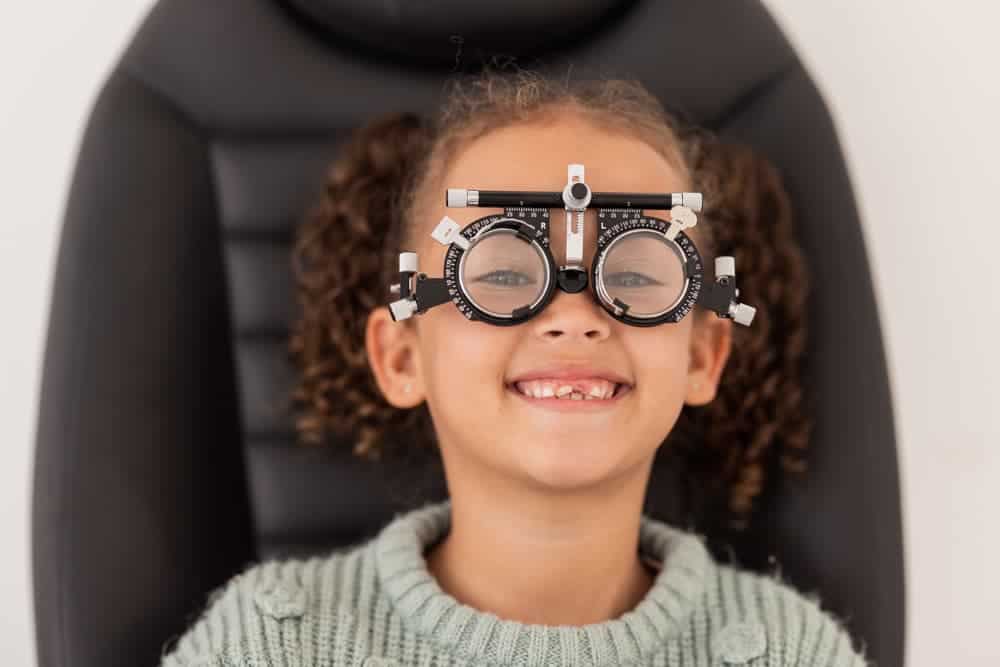
What if your child’s prescription glasses could help them see more clearly today while also slowing the progression of their short-sightedness?
That’s the idea behind HOYA MiYOSMART iQ, a new generation of myopia-control spectacle lenses. These redesigned lenses use enhanced optical technology to help slow excessive eye growth during childhood.
The early clinical findings are encouraging, but what do they mean for your child?
My name is David Truong, and I’m the Owner and Principal Optometrist at Beyond Eyecare in Sydney. I’ll explain how MiYOSMART iQ works, what the research tells us and whether these lenses might suit your child.
KEY TAKEAWAYS
- MiYOSMART iQ combines prescription vision correction with optical technology intended to slow childhood myopia progression.
- Its enhanced DIMS design places treatment segments closer to the lens centre, increases defocus strength and expands the treatment area.
- A 2026 clinical trial involving 196 children reported no average myopia progression after 12 months among those wearing MiYOSMART iQ.
- Regular eye examinations, accurate lens fitting and consistent wear help optometrists assess whether treatment is working.
What Makes MiYOSMART iQ Different From Ordinary Glasses?
Ordinary prescription glasses correct blurry distance vision caused by short-sightedness (myopia). However, they don’t specifically address the excessive eye growth associated with childhood myopia progression.
As a child’s eye grows longer, their prescription often becomes stronger. Higher levels of myopia are associated with an increased lifetime risk of retinal detachment, myopic macular degeneration and other eye conditions.
MiYOSMART iQ aims to correct distance vision while helping slow that excessive growth.
It’s the next generation of HOYA’s original MiYOSMART lens, which already has substantial clinical evidence supporting its effectiveness.
A two-year randomised clinical trial of the original MiYOSMART DIMS technology found approximately 52% less myopia progression and 62% less axial elongation compared with conventional single-vision glasses.
MiYOSMART iQ builds on that design with changes intended to provide a stronger myopia-control effect.
How Does MiYOSMART iQ’s New DIMS Technology Work?
Both generations use Defocus Incorporated Multiple Segments (DIMS) technology.
The original design combines a clear central viewing area with hundreds of tiny surrounding optical segments.
The central area provides clear vision, while the surrounding segments create myopic defocus, changing how light focuses on the retina. Researchers believe this signal helps regulate the excessive eye growth associated with myopia progression.
MiYOSMART iQ introduces what HOYA calls DIMS Triple Enhanced Design (TED).
It makes three changes:
- Treatment segments closer to the centre: Directs more of the treatment effect towards the retina immediately surrounding central vision.
- Stronger defocus power: Provides a stronger optical signal intended to slow eye growth.
- Larger treatment area: Expands coverage across the spectacle lens.
According to HOYA’s explanation of MiYOSMART iQ technology, these refinements aim to improve the treatment effect while maintaining clear everyday vision.
What Do The Latest MiYOSMART iQ Clinical Trials Show?
In 2026, researchers from The Hong Kong Polytechnic University reported results from a randomised clinical trial involving 196 children aged four to twelve.
The study compared MiYOSMART iQ with the original MiYOSMART design and conventional single-vision spectacles.
After 12 months, children wearing MiYOSMART iQ showed no myopia progression on average.
The researchers also measured axial length, the distance from the front to the back of the eye. Excessive axial elongation is an important indicator of progressing childhood myopia.
The reported results were:
| Measurement after 12 months | MiYOSMART iQ | Ordinary glasses |
|---|---|---|
| Average prescription change | +0.046 D | −0.534 D |
| Average axial elongation | 0.075 mm | 0.346 mm |
HOYA also reported that approximately nine out of ten children wearing MiYOSMART iQ had no clinically relevant myopia progression during the first year, defining clinically relevant progression as prescription worsening of 0.50 dioptres or more.
The average results don’t mean every child’s myopia stopped progressing.These are group averages, however, and don’t mean every child’s myopia stopped progressing.
You can read the 12-month findings reported by Optometry Australia.
Did younger children respond differently?
Yes. The researchers reported encouraging results among children aged four to six, who experienced 65% less myopia progression and 44% less axial elongation compared with those wearing ordinary glasses.
These findings matter because children who develop myopia early often have more years during which their prescription can worsen.
These 12-month findings were presented at scientific conferences, and longer-term peer-reviewed research will help establish whether the benefits continue.
Will MiYOSMART iQ Glasses Be Comfortable For My Child?
MiYOSMART iQ lenses look similar to ordinary prescription glasses, making them practical for school, reading, sport and everyday activities.
Some children may initially notice mild changes in their peripheral vision while adapting to the treatment segments. If discomfort persists, their optometrist should review the fit and prescription.
How often should children wear MiyoSmart iQ glasses?
Consistent daily wear is important because the lenses deliver their optical treatment effect while your child wears them.
I’d encourage parents to follow the recommended wearing schedule rather than reserving the glasses for classroom activities.
HOYA offers Clear lenses for everyday wear and Chameleon photochromic lenses that darken outdoors.
Choosing comfortable frames is equally important. Correct frame fit and lens positioning help maintain clear vision and place the treatment zones where intended.
Which Children Might Benefit From MiYOSMART iQ?
At Beyond Eyecare, we assess your child’s prescription, previous myopia progression, age, eye growth and family history to determine whether myopia-control glasses may be suitable.
We also consider how comfortably and consistently they can wear their glasses.
Should children already wearing MiYOSMART switch to MiYOSMART iQ?
Not necessarily.
The original MiYOSMART lenses have substantial clinical evidence supporting their effectiveness.
If your child’s prescription and eye growth remain well controlled, changing to the newer design may offer little practical advantage.
However, if their myopia continues progressing despite consistent wear, we may need to review their treatment.
How Can Parents Tell Whether MiYOSMART iQ Is Working?
The best way to monitor success is through regular eye examinations.
We look at two important measurements:
- Prescription changes: Whether your child’s short-sightedness is becoming stronger.
- Axial length: How quickly their eye is growing.
Comparing these results with earlier measurements helps us assess whether myopia progression is slowing.
I wouldn’t expect every child’s prescription to remain completely unchanged. Some progression can occur despite treatment.
If we identify continued progression, we can review their wearing habits, check their glasses and consider whether another approach would be appropriate.
The important thing is to measure progress rather than assume treatment is working simply because your child sees clearly.
Final Thoughts
Considering myopia control early can help manage progression while a child’s eyes are still developing.
MiYOSMART iQ offers encouraging advances in spectacle lens technology, supported by promising initial clinical findings.
My advice is to establish how quickly your child’s myopia is progressing before choosing treatment. That gives us a sound basis for deciding which options are appropriate and monitoring their effectiveness.
At Beyond Eyecare, we can assess your child’s eyesight, investigate their myopia progression and discuss suitable management options. If you’re concerned about your child’s short-sightedness, we encourage you to book an eye examination to discuss the available management options.
Book an appointment with Beyond Eyecare today at Zetland (02) 9662 6364 or Surry Hills (02) 9556 1160. You can also schedule a convenient time through our website.