
Clear vision without daytime contact lenses or glasses feels like a luxury, yet it’s something many people now enjoy every day. OK lenses, also known as orthokeratology, make this possible by working while you sleep and leaving you free during the day.
I’m David Truong, the Owner and Principal Optometrist at Beyond Eyecare in Sydney. My role is to help children, teenagers, and adults find the right vision solutions for their lifestyle and long-term eye health. OK lenses are one of the most rewarding treatments I provide because they deliver both convenience and proven benefits for myopia control in children.
In this article, I answer some of the most frequently asked questions that we hear in our clinic about OK (a.k.a. Ortho-K) lenses. By the end, you’ll know whether OK lenses could be the right option for you or your family.
Key Takeaways
- OK lenses are overnight contact lenses that provide daytime vision correction without glasses.
- OK lenses are a non-surgical and reversible alternative to LASIK.
- OK lenses can slow the progression of myopia in children.
- OK lenses are suitable for many adults who want freedom from glasses and daytime contacts.
- OK lenses are safe when fitted professionally and cared for with proper hygiene.
1) What Are OK Lenses?
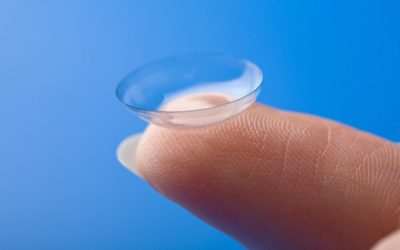
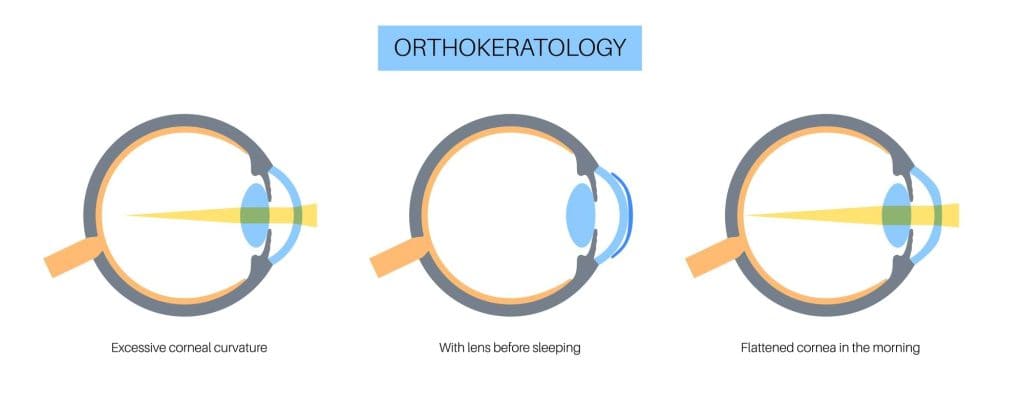
OK lenses are custom made rigid contact lenses worn while you sleep. As you rest, they gently reshape the surface of your cornea so that when you wake up and remove them, your vision is clear. The effect is temporary and completely reversible, which means if you stop using them, your eyes return to their natural shape.
2) How Much Do OK Lenses Cost?
Who doesn’t wonder about the price tag before trying something new for their eyes? In Sydney, the first year with OK lenses usually costs between $1,500 and $3,000. That figure covers the initial consultation, custom lens design, fitting, and follow-up appointments to make sure everything is working as it should.
Ongoing expenses include lens replacement, cleaning solutions, and regular check-ups. The exact cost depends on your prescription and how complex your corneal shape is.
3) What Are the Side Effects of OK Lenses?
Most people notice only mild, temporary effects in the early days. You might feel the lens on your eye at first, or experience slight dryness or blur as your vision stabilises. These symptoms usually ease within a week or two.
More serious problems are rare but possible if hygiene slips. Poor cleaning can allow bacteria to grow, increasing the risk of infection such as microbial keratitis. Neglected lenses may also cause corneal staining or scarring.
4) How Long Should You Wear OK Lenses?
If you wear OK lenses for six to eight hours per night that should give the contact lenses enough time to reshape the cornea so you wake up with crisp, clear vision. The results usually last a full day and often stretch into the next, depending on your prescription. Wear them every night to keep your vision sharp and reliable.
5) Can You Wear Overnight Lenses During the Day?
OK lenses are built for bedtime, not for long hours awake. The design works best while you sleep, because your eyes are closed and the lenses stay in stable contact with the cornea. By morning, they’ve done their job. You remove them and enjoy clear vision all day without needing anything on your eyes.
That said, vision is still sharp if you leave the lenses in while awake. The issue is comfort. They’re firmer than soft contacts, so most people notice them more during the day.
6) Who Is Suitable for Ortho-K?
Children and teenagers are highly suitable for Ortho-K contact lenses. Research shows they can slow down the progression of short-sightedness by about half, which is a game-changer for kids facing stronger prescriptions each year. We usually start considering them from around age six, provided the child is motivated and the parents can oversee lens care.
Adults can be excellent candidates too. If you’re mildly to moderately short-sighted and want freedom from glasses or daytime contacts, OK lenses may suit you well. They’re particularly popular among athletes, tradies, and people with dry eyes who struggle with regular lenses.
7) How Effective Is Orthokeratology for Myopia Control?
Studies consistently show that orthokeratology significantly reduces risk of rapid progression, especially in younger patients. By reducing the rate of change, we also lower the lifetime risk of serious conditions linked to high myopia, such as retinal detachment or glaucoma.
Long-term results depend on continued wear. Stop the treatment, and progression tends to return to its natural pace. Stick with it, and the benefits accumulate year after year.
8) How Quickly Do OK Lenses Work?
For many patients vision often begins to sharpen within the first few nights of OK lens wear. By the end of the first week or two, most people are enjoying clear sight without glasses or daytime contacts.
Those with higher vision prescriptions may need a little more patience. It can take four to six weeks for the cornea to stabilise and deliver full correction. During that time, regular follow-ups help me fine-tune the fit and monitor safety.
9) How Long Do the Effects Of Orthokeratology Last?
For most people, the clear vision lasts a full day. In fact, the reshaping effect often holds for up to 72 hours, though sharpness gradually fades if lenses aren’t worn nightly.
Consistency is what keeps the results stable. Wearing the lenses each night refreshes the corneal shape and keeps your vision reliable. Miss a night, and you may still see well enough the next day, but if you stop wearing them, your eyes drift back to their natural prescription.
10) Are OK Lenses Comfortable?
OK lenses can feel a little uncomfortable in the beginning, which is perfectly normal. Because they’re firmer than soft contacts, you’ll notice them more during the first few nights.
By morning, they’ve done their work and come out before you start the day. Within a week or so, the initial awareness fades, and most patients report they barely notice them at all.
11) How Safe Are OK Lenses?
With proper fitting and hygiene, the the safety risks of using OK lenses are low. Cleanliness matters more than anything else. Disinfecting lenses daily and following the care instructions keeps bacteria at bay. Patients who cut corners on hygiene are the ones who run into trouble, with infections like microbial keratitis being the main concern.
12) How Do You Care for OK Lenses?
How do you keep OK lenses safe and effective for the long haul? It starts with a consistent cleaning routine. Each morning, once the lenses are removed, they need to be cleaned and disinfected with the solution I recommend. This keeps the surface clear of protein deposits and bacteria. Do a deeper clean once a month to maintain the lens condition and prolong its life.
Most people need fresh lenses every 12 to 24 months, although some may need them sooner if their prescription changes or the lenses show signs of wear.
13) Can OK Lenses Correct Multiple Vision Problems?
Which other vision issues can benefit from OK lenses besides short-sightedness? While myopia remains the main focus, research and clinical use show they can help in other areas too.
- Astigmatism: OK lenses can correct certain types, depending on the corneal shape. With the right design, many patients notice significant improvement.
- Hyperopia (long-sightedness): Results are less predictable. Some early cases respond well, though this isn’t the primary focus of OK treatment.
- Presbyopia (age-related near vision loss): New lens designs are being trialled. They show promise but aren’t widely available yet.
OK lenses remain most effective for myopia but their applications are gradually widening.
14) What Happens If You Miss a Night?
What if you forget to put your OK lenses in before bed? The next day, most people still see fairly well. The reshaping effect usually holds for at least 24 hours, sometimes longer. But fine detail, like text on a screen or road signs at a distance, may start to blur.
Miss two or three nights in a row, and your cornea gradually shifts back to its natural shape. Vision then returns to your original prescription. That reversibility is a safety net, but it also means the treatment only works if it’s kept up regularly.
15) What Are the Long-Term Results with OK Lenses?
How do OK lenses hold up over years of use? For adults, it means consistent freedom from glasses or daytime contacts as long as the lenses are worn nightly. The effect doesn’t fade with age, provided the lenses are replaced on schedule and cleaning routines are followed.
For children, the long-term benefits are even greater. By slowing myopia progression, OK lenses help protect against future eye health risks linked to high prescriptions, such as retinal detachment or glaucoma. That protective effect continues as long as the treatment is maintained through the growing years.
Final Thoughts
OK lenses give patients the freedom to enjoy clear vision during the day without relying on glasses or soft contacts. The treatment works while you sleep, leaving your eyes free for work, school, sport, and everything in between.
Book an appointment with Beyond Eyecare today at Zetland (02) 9662 6364 or Surry Hills (02) 9556 1160. You can also schedule a convenient time through our website.

Therapeutical endorsement