

What’s the best way to prevent your child’s myopia from getting worse? And when should you actually start?
I’m David Truong, Principal Optometrist and owner of Beyond Eyecare here in Sydney. Since opening our optometry practice in 2020, we’ve focused on giving families real answers backed by evidence. Myopia control is a big part of what we do, and it’s one of the areas we’re most passionate about. Why? Because the earlier we act, the better chance we have of protecting a child’s long-term vision.
We see it far too often. Parents often think glasses are enough, but by the time the prescription jumps year after year, we’ve already lost precious time. Myopia tends to progress fastest in younger children, and studies now show that up to 50–60% of that progression can be slowed with the right treatments.
In this article, you’ll learn about five (5) innovative myopia control strategies commonly used by Sydney optometrists, plus the lifestyle habits that make them even more effective.
Key takeaways:
- Myopia control should begin as early as possible to be most effective.
- Ortho-K and multifocal lenses help slow eye growth and offer clear vision without glasses.
- Atropine eye drops are safe, simple and well-supported by research as a myopia control choice.
- Specialised glasses offer non-invasive myopia treatment option.
- Red light therapy can be a valuable adjunct treatment strategy for myopia.
- Outdoor time and screen breaks play a vital supporting role in slowing myopia progression.
Understanding The Importance of Myopia Control
Myopia tends to progress faster when it starts early. That’s the tricky bit. The younger the child, the faster the condition can worsen. When parents ignore early signs, it often leads to to high levels of myopia later. This carries risks for serious problems like retinal detachment, glaucoma, or macular degeneration.
We’ve seen too many young patients struggle at school not because they lack ability, but because they simply can’t see well enough. It affects how they learn, how they play sport, even how confident they feel in a group.
Strategy 1: Orthokeratology (Ortho-K) Lenses
What if your child could see clearly all day without wearing glasses or contacts during the day?
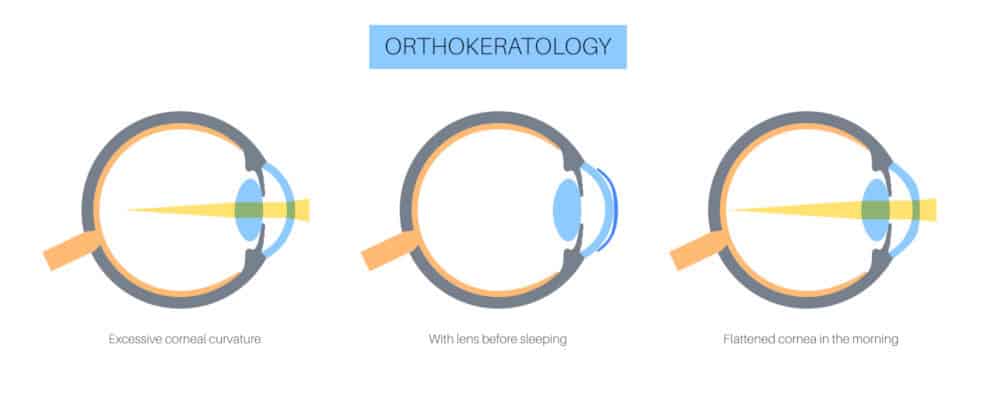
That’s exactly what Ortho-K offers. These custom-made rigid lenses are worn overnight while your child sleeps. While they rest, the lenses gently reshape the front surface of the eye. In the morning, they take the lenses out and enjoy clear vision without the need for daytime correction.
We often recommend Ortho-K for active kids who don’t want glasses getting in the way of sport or play. It’s also one of the most effective methods to slow down myopia progression. The way the lenses alter peripheral focus helps reduce the eye’s natural urge to keep elongating and making myopia worse.
The catch? Hygiene. It’s not a set-and-forget solution. Proper cleaning routines are non-negotiable. That’s why we work closely with families to make sure it’s the right fit and follow up regularly to keep things on track.
Strategy 2: Atropine Eye Drops
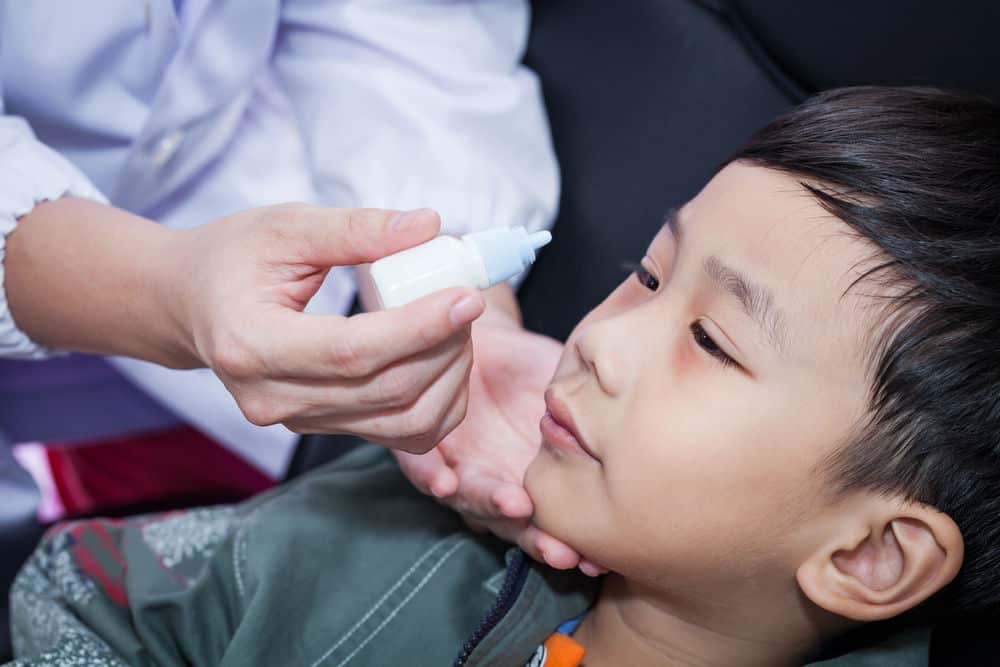
Atropine eye drops might look like ordinary drops, but in tiny concentrations, they can make a real impact on slowing childhood myopia. These aren’t the same drops used to dilate eyes during an exam. We’re talking about a much lower dose that’s just enough to ease the eye’s focusing effort and reduce the signals that push the eye to keep growing.
Optometrists can prescribe concentrations between 0.01% and 0.05%, depending on the child’s age, progression rate, and comfort. It’s a quick drop in each eye at bedtime. That’s it. Studies show these drops can slow myopia progression by up to 60%. No contact lenses. No fuss during the day. Just a nightly habit.
There are some mild side effects, like light sensitivity or a bit of blur up close, but these are rare and usually manageable. The key is regular reviews. It’s a great option for younger children or families looking for something non-invasive and easy to stick with.
Strategy 3: Myopia Control Glasses
Which option works best for kids who aren’t ready for contact lenses?
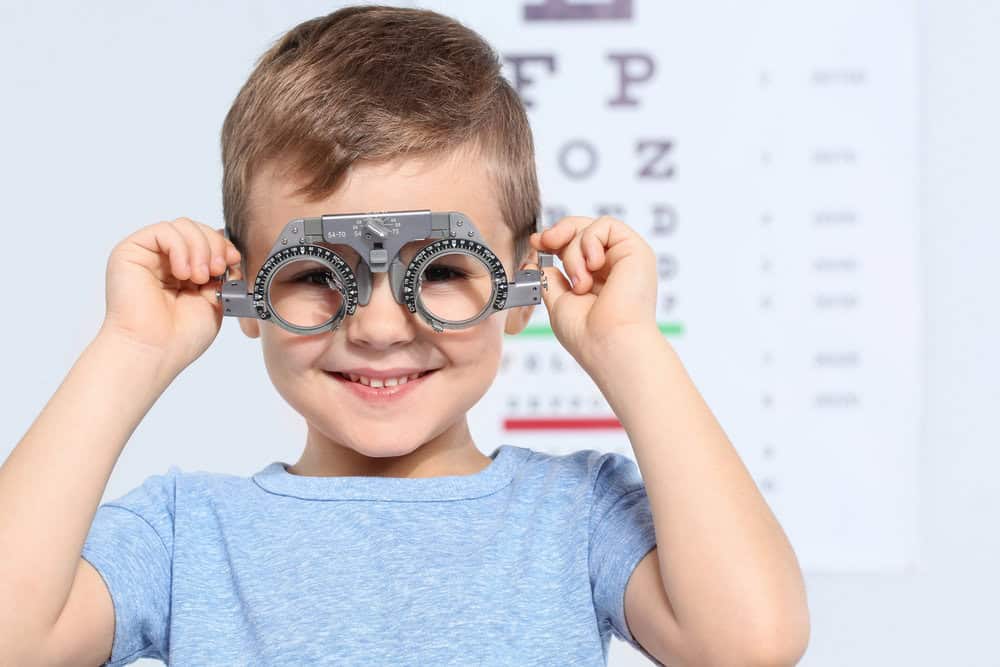
Myopia control glasses are a brilliant place to start. They look like regular glasses, but the lens design is anything but ordinary. Brands like Stellest and MiYOSMART use advanced defocus technology to help redirect how light focuses in the eye, slowing the signals that tell the eye to keep growing longer.
We’ve fitted plenty of these lenses for younger kids or those who just prefer sticking with glasses. The results are consistent and encouraging. Clinical trials have shown they can cut the rate of myopia progression by around 50% and kids don’t have to change a thing about their day-to-day routines.
These glasses work best when worn full time. That means at school, during homework, even while relaxing at home. We always remind parents: the more consistent the wear, the more protection their child gets.
Strategy 4: Multifocal Contact Lenses
Multifocal contact lenses are soft lenses worn during the day. They’re designed with special zones that help correct vision while also sending a useful signal to the eye to ease its growth. MiSight is a popular brand for myopia control in Australia.
For older kids and teens who are ready to handle lenses on their own, these are a strong option. They give clear vision across all distances, so there’s no need to switch between glasses or worry about blurry near or far vision. Studies have shown these lenses can reduce myopia progression by around 50%.
We sometimes get asked how they stack up against Ortho-K. The main difference is timing. Ortho-K works while your child sleeps, whereas multifocal lenses are worn during the day. The choice depends on lifestyle, eye shape, comfort level, and sometimes, just what your child prefers.
If your child is keen to wear contacts and you want something clinically proven to slow myopia, these are well worth considering.
Strategy 5: Red Light Therapy for Myopia
Red light therapy is one of the newer options in the myopia control toolkit for some optometrists. It involves exposing the eyes to low-level red light, usually for just a few minutes, twice a day. While it might sound a bit sci-fi, early studies show it may help reduce the eye’s elongation rate, which is the core issue behind myopia progression.
Kids don’t feel anything during the treatment, and it doesn’t interfere with vision or schoolwork. That makes it easy to add into a daily routine. Some families explore this as an add-on when other treatments need a boost.
That said, red light therapy is still relatively new compared to other methods. We don’t recommend it as a standalone solution just yet. But for some kids, it can be a valuable part of a broader treatment plan, provided it’s managed under professional supervision.
If you’re curious whether it’s suitable for your child, we can talk through the pros and cons during a consult.
Supporting Lifestyle Changes for Myopia Control
Where does daily routine fit into slowing myopia? No treatment works in a vacuum. If we’re serious about slowing myopia, we also need to look at habits outside the clinic. Outdoor time is a big one. Getting your child outside for at least two hours a day can make a meaningful difference. Natural light helps regulate eye growth, and looking into the distance gives the focusing muscles a break.
Then there’s screen time. Homework, tablets, phones add up quickly. We often recommend: every 20 minutes, take a 20-second break and look at something at least 6 metres away. It sounds simple, but it helps reduce eye strain and keeps those near-work habits in check.
A few small changes can go a long way.
Monitoring and Follow-Up Care
Tools like corneal topography, axial length scans, and OCT eye imaging give us hard data on how your child’s eyes are changing over time. This helps us pick up on subtle shifts that glasses prescriptions alone can’t reveal.
Before starting any treatment, we collect a myopia baseline diagnosis to understand where your child’s vision is now. Then we review progress every six to twelve months. Sometimes that means adjusting a treatment, or switching to a different method entirely.
What matters most is catching changes early and being flexible enough to adapt. The eye doesn’t grow in a straight line, and no two kids follow the same pattern. That’s why ongoing care is just as important as the initial decision to begin treatment.
Final Thoughts
You want your child to see clearly, thrive at school, and stay active without their glasses prescription climbing every year.
But myopia doesn’t take weekends off — it quietly progresses while parents hope things will stabilise on their own.
If that sounds like your family, the best decision is to book a consultation with us — we’ll measure how your child’s eyes are changing, explain the options, and create a plan that protects their vision for the long term.
And we understand — it’s easy to feel uncertain or overwhelmed, but taking action now can make a real, measurable difference to how well your child sees in the years ahead.
Book an appointment with Beyond Eyecare today at Zetland (02) 9662 6364 or Surry Hills (02) 9556 1160. You can also schedule a convenient time through our website.

Therapeutical endorsement